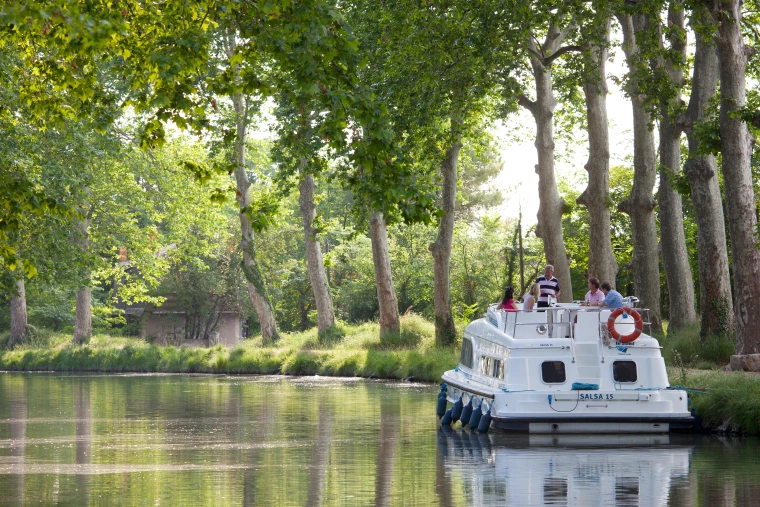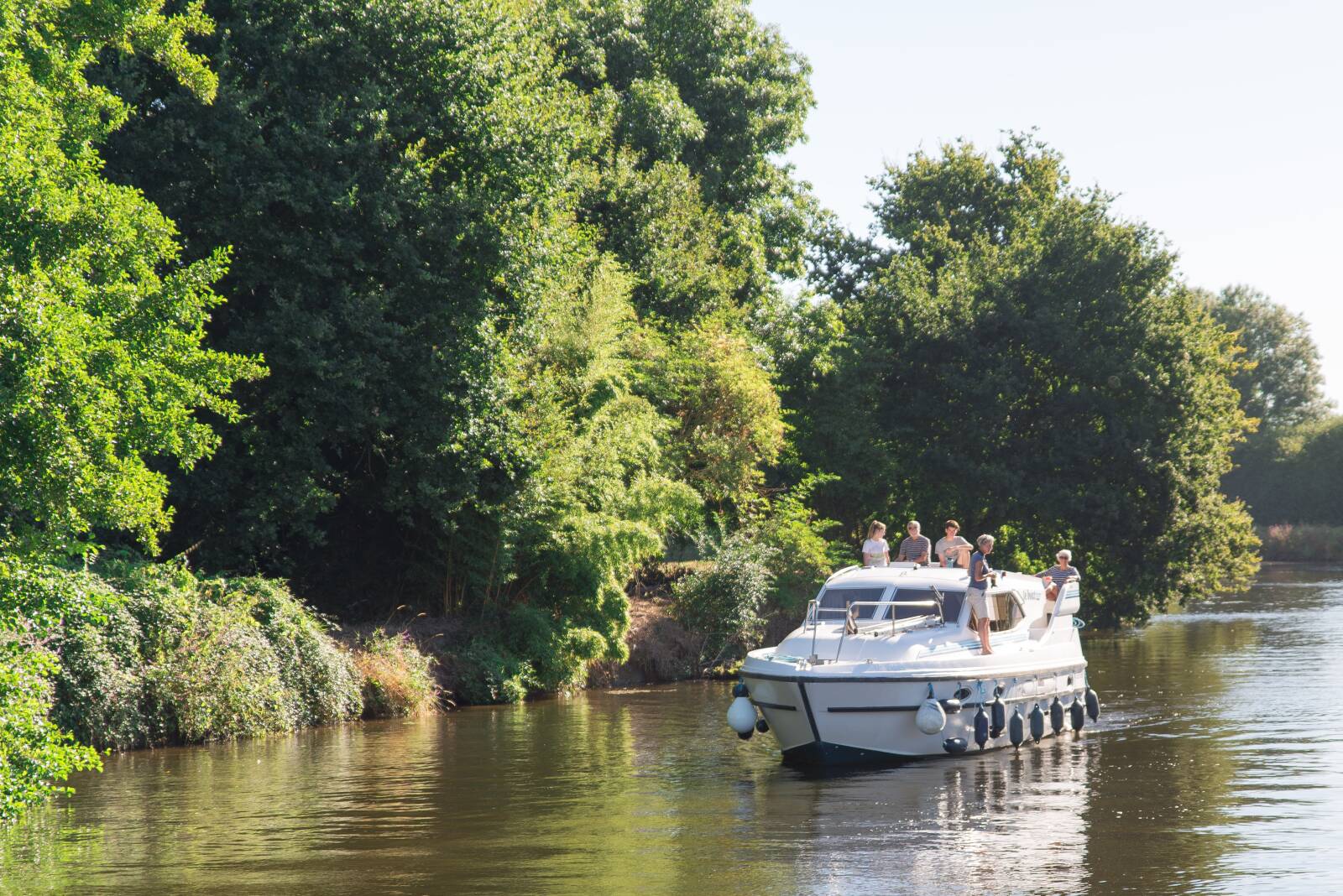
How to plan your river cruise itinerary in May: our step-by-step guide
How to plan your canal boat holiday itinerary in May: our step-by-step guide
You've booked your licence-free boat and now you're wondering how to organise your week on the water? That's the question almost every first-time boater asks, and it's the right one. Planning a river cruise itinerary isn't like planning a road trip: distances work differently, locks set their own pace, and the best stopping points are worth seeking out. Here's how to build a smooth, realistic itinerary, even for a first canal boat holiday.
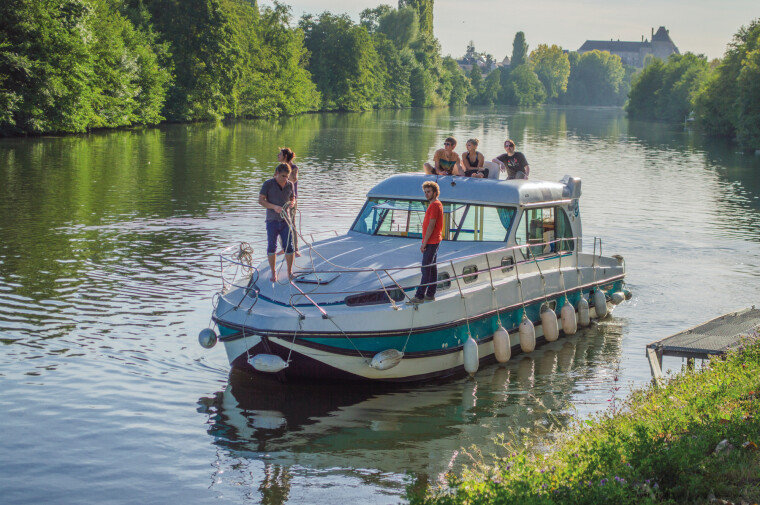
How far can you travel in a day in May?
This is the starting point for any successful itinerary. On a licence-free hire boat, speed is limited to around 8 km/h on most canals, and that's a good thing. Going faster would damage the banks and deprive you of the whole point: watching the landscape drift by.
In May, daylight lasts between 13 and 15 hours. But cruising for hours on end isn't comfortable or realistic for a first river holiday. In practice, daily stages are measured more in hours than kilometres, a typical day involves 2 to 4 hours of actual navigation, depending on mood and the number of locks. Here's a simple guide:
| Style | Distance per day | Navigation time |
|---|---|---|
| Relaxed cruise / family | 8 – 15 km | 2 to 3 hrs / day |
| Active cruise / explorer | 15 – 25 km | 3 to 5 hrs / day |
💡 Our tip: In May, try the "3 hours cruising + half-day ashore" approach. Navigate in the morning when the light is at its best, then explore villages and cycle paths in the afternoon. Don't forget to factor in locks, more on that below.
How do you plan for locks along your route?
Locks are one of the defining features of a canal holiday. For first-time boaters, they can feel daunting at first, and quickly become one of the highlights of the trip. But they do have a real impact on your daily schedule. Here's what you need to know before you set off:
How long does a lock take?
Allow an average of 20 to 40 minutes per lock, depending on the type and any waiting time. On some canals like the Canal du Nivernais in Burgundy, you might pass through 20 locks in a single day, which can easily add up to several hours.
- Automated locks (Canal du Midi, Alsace): 15 to 25 min, little waiting in May
- Manual locks (Burgundy, Charente): 25 to 45 min, operated by a lock keeper, often a great moment to chat and get local tips
- Staircase locks (e.g. the 9 Fonsérannes locks on the Canal du Midi): allow 1h30 to 2h for the whole flight
💡 Quick tip: On your navigation map, budget 30 minutes per lock. If your day includes 6 locks, that's 3 extra hours to factor in, before you've even moved the boat.
Opening hours: the detail that changes everything
In May, most locks operate roughly from 9am to 7:30pm. Some close for a lunch break between noon and 1:30pm, a detail many boaters only discover once they're on the water. Check your canal's lock schedule on the VNF website (vnf.fr) before you leave.
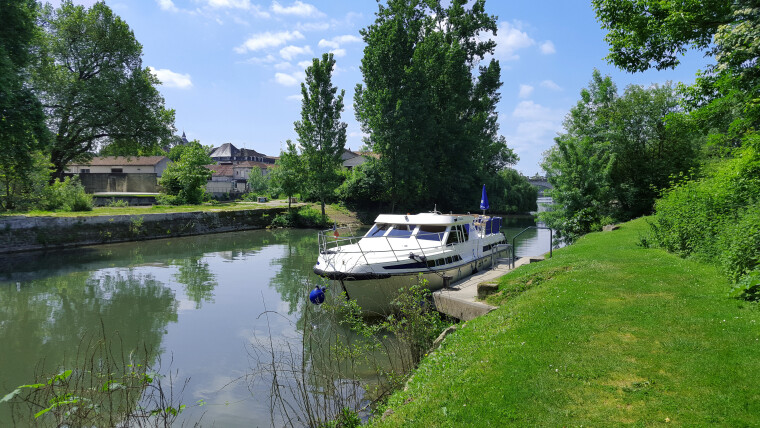
Where to moor for the night: stopping points, marinas and local gems
Evening mooring is one of the most enjoyable parts of a canal cruise. Where you stop shapes the whole mood of the evening, a lively village square, a quiet wild bank, a marina with a restaurant nearby. You have three main options:
- Free riverside halts: municipal pontoons along the canal, often with water and sometimes electricity. In May there's barely any competition, you can take your pick.
- Marinas: paid mooring (€5–€15 per night), with showers, toilets and usually a café or shop nearby. A reassuring choice for your first nights.
- Wild mooring on the bank: permitted on most navigable waterways, provided you don't obstruct other boats or moor on private land. Stake the lines, put out the deck chairs.
💡 Practical tip: Don't leave your mooring spot to chance late in the day. The best places fill up by late afternoon, even in May. Aim to arrive and moor between 4pm and 5pm.
Which apps and tools should you use to plan your itinerary?
The good news: there's no single right way to plan a river cruise itinerary. Here are the tools most boaters rely on, from the simplest to the most detailed.
Before you leave
- The waterway guide: the go-to paper reference for inland cruising in France. Every canal is mapped kilometre by kilometre, with locks, moorings and points of interest. You can order one before your trip.
- The VNF website (vnf.fr): for lock timetables, current navigation notices (works, low water levels) and official charts.
- The CrisBoat team: before you set off, our advisors can suggest an itinerary tailored to your duration and group. It's part of the booking, make use of it.
On the water
- The paper chart on board: all CrisBoat boats come equipped with a navigation chart for your region. Most of the time, it's all you'll need.
💡 Best tool of all: a chat with the lock keeper. In May, they're unhurried, usually passionate about their waterway, and they always know the best local spots of the week.
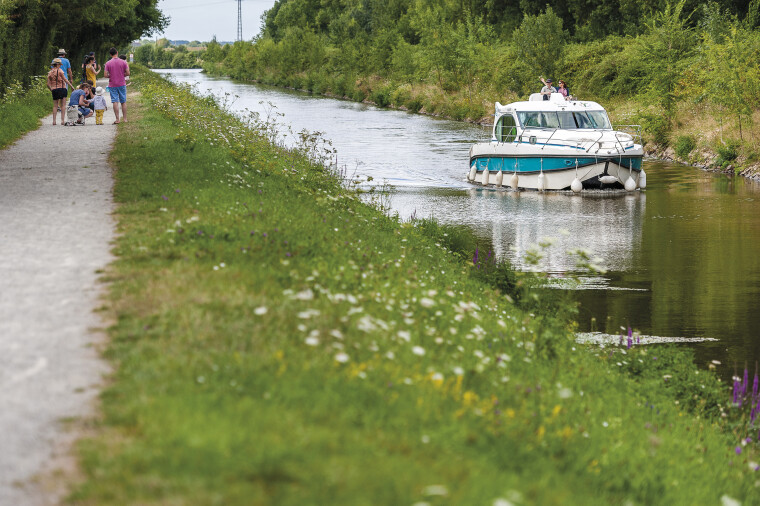
Ready to cast off?
Planning a canal cruise itinerary isn't about building a minute-by-minute schedule, it's about giving yourself a framework so you can improvise freely. Know how long a lock takes, where you can stop for the night, and how to frame a day on the water: that's all you need to set off with confidence, even for the very first time.
The rest, you'll discover on the water. And trust us, that's the best way to learn it. **Browse our destinations and May availability on CrisBoat, no licence, no stress.
FAQ - How to plan your canal boat holiday itinerary in May
A week (7 nights) is the ideal length for a first river cruise: enough time to find your feet, enjoy the stops and never feel rushed. 4-night mini-breaks and 3-night weekends are also popular for a first experience.
No. In France, hire boats under 15 metres can be handled without a licence. A 2-hour briefing is given by the base team on the day of departure. No previous experience is needed.
Speed is limited to 8 km/h on most French canals, and 6 km/h near locks and residential areas. This protects the banks and wildlife, and is a big part of what makes inland cruising so peaceful.
Absolutely. One of the great pleasures of a licence-free canal holiday is total freedom. You can linger two nights in a village you love, make an early start one morning, or change direction with the weather. The only fixed point: return the boat to the base on the agreed date.
Poursuivez votre lecture !
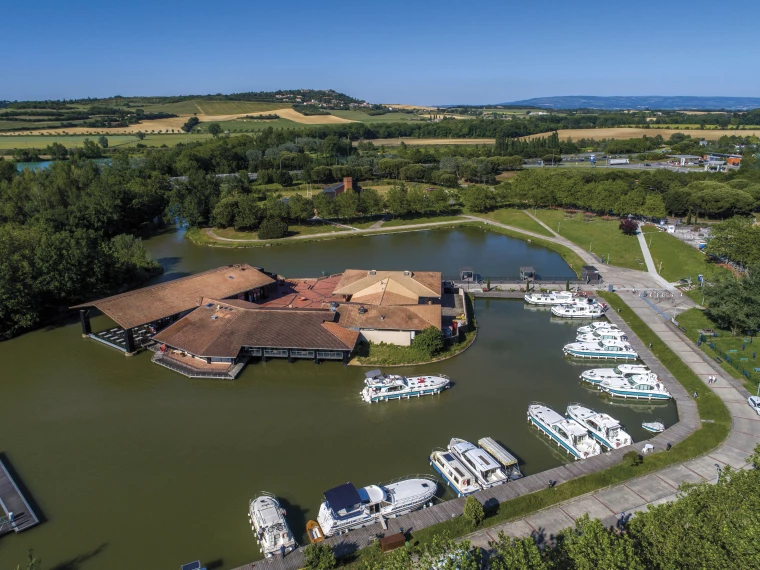
How Much Does a Licence-Free Houseboat Holiday Cost?
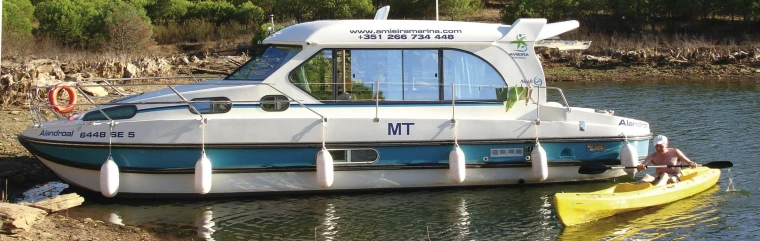
Which Licence-Free Houseboat Should You Choose: Sedan 1010 or Tarpon 32?